
How To Make Sourdough Starter

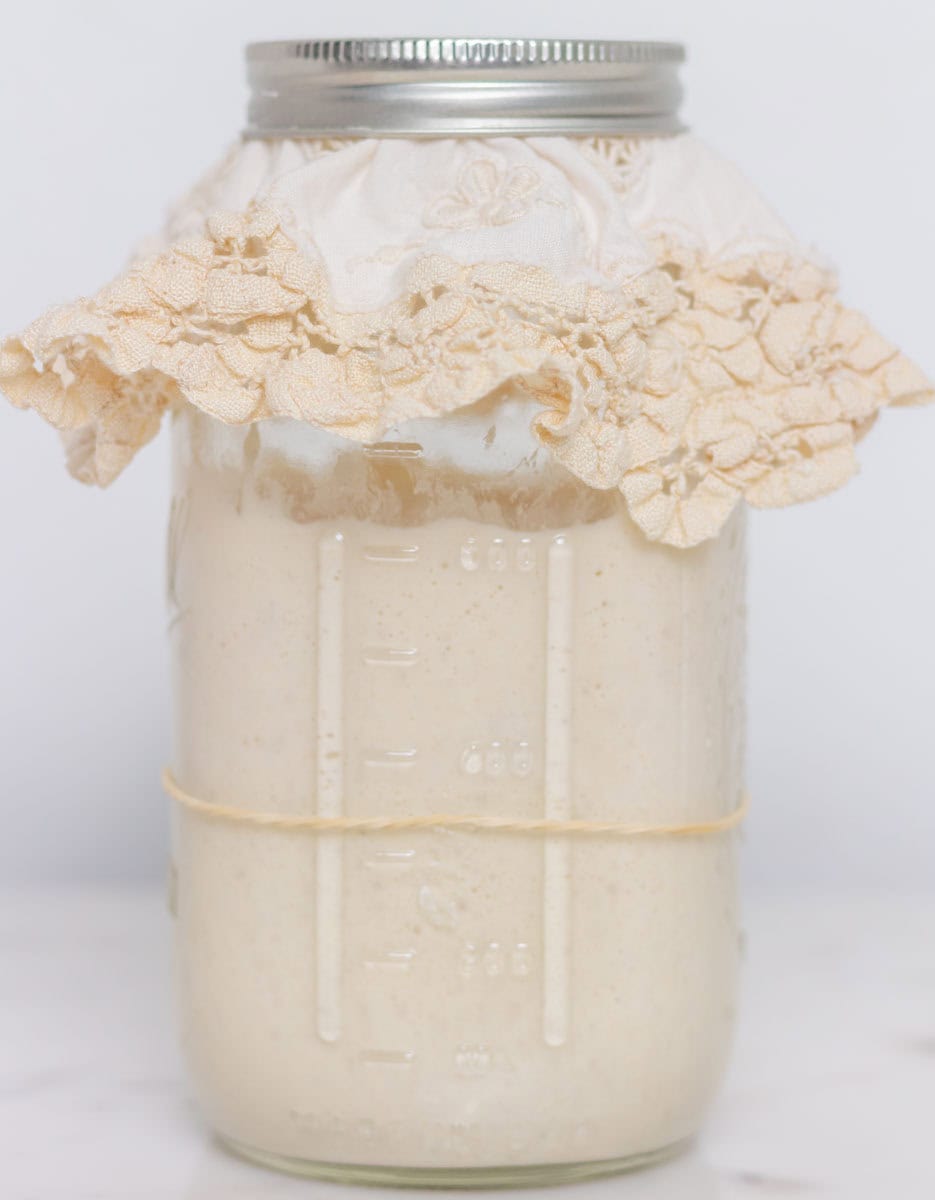
If you’ve been wanting to learn how to make sourdough starter to make your own sourdough bread and other baked delights, this is the guide for you! This recipe is so easy and has just two ingredients to start.

Why You Will Love This Recipe
- It’s easy!
- It only requires two ingredients.
- I offer plenty of troubleshooting tips, if needed.
- You will be on your way to making your own sourdough bread in no time.
Last year I decided I wanted to try making my own sourdough bread but I needed to learn how to make sourdough starter. I didn’t know where to start. How much yeast would I need? Well, none, I soon found out.
A sourdough starter is a living combination of flour, water, wild yeast and good bacteria, like your own pet that you feed with flour. But where do you get the yeast?
You add water to flour, which contains natural yeasts/bacteria. When you feed fresh flour and water every day, the bacteria in the flour grows, gets bigger and bubbly so you can actually make bread with it!
You will need patience and likely troubleshooting. But you’ve got this!
Ingredients
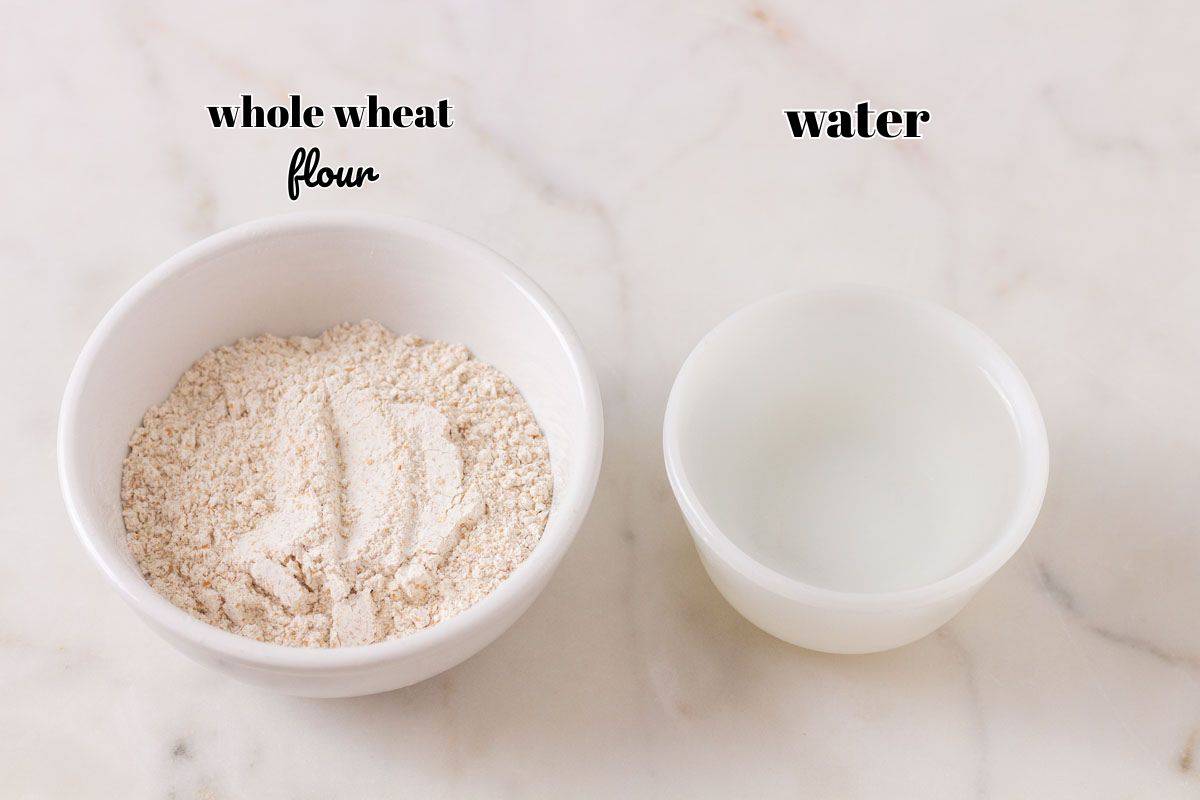
- whole wheat flour (You can switch to all-purpose after a few days. Whole wheat flour just gets the starter going a little faster.)
- all-purpose flour (to use after a couple of days)
- water
See recipe card for quantities.
Equipment
- clean Mason jar (I like to use the wide-mouth 32-ounce jar.)
- light cloth to secure as the lid to your jar
- kitchen scale
- glass measuring cup
- butter knife
- small rubber/silicone spatula
- rubber band
Instructions


Step 1: Add 1/2 cup (60g) whole wheat flour to a Mason jar. (I like to use a 32-ounce with a wide mouth.)
I prefer to weigh my ingredients in grams with a digital kitchen scale. It gives more precise results. Grams give you equal ratios by weight and cups can vary by volume. Let the texture be your guide, whichever method you use.
Step 2: Pour 1/3 cup (60g) water into the jar with the flour. If too thick, you can add a tablespoon or two more (15-30g), as needed.


Step 3: Stir mixture together with a butter knife until combined. (At first, my starter was too dry. It’s because whole wheat flour soaks up more water. If you find this happens, add an extra tablespoon or two (15-30g) of water until you have a texture like thick pancake batter.)
Step 4: Use a small rubber spatula to even out your starter.


Step 5: Place a rubber band at your starter’s level to track its rise.
Step 6: Cover your jar loosely. (I like to use a cloth doily to cover my jar so that some air can still get inside. I don’t use the metal cover that comes with the Mason jar. I do use the screw part of the lid to secure the doily.) Leave your starter at room temperature. (70-75°F)
Step 7: After 24 hours, if you see that your starter has some bubbles or a mild smell, you can go ahead and give it the first feeding. If not, give it a little stir and check back in 24 hours.
Once you’re ready to feed, discard half of the starter and then add 1/4 cup (30g) of whole wheat flour and 3 tablespoons (30g)of water. (Add more if it’s too thick. You want pancake batter consistency.) Stir with a butter knife and place the rubber band at the batter line again.
Step 8: Give your starter a name! Get creative and have fun. My starter’s name is Flourence. She’s a sassy girl! It’s kind of like having a pet.
What To Expect While Your Starter Gets Established
- Day 1 – Mix the flour and water, stir, loosely cover and store at room temperature. Nothing much to see yet.
- Day 2 – After 24 hours, you check for a few bubbles and a tangy smell. That’s what we’re looking for. If you have that, you’re ready to feed your starter. Feed as in step 7 above. If not, check back in 24 hours.
- Day 3 – You should start seeing more bubbles throughout and a stronger sour/yeasty smell. Feed your starter as before.
- Day 4-5 – Your starter could possibly slow down at this point. You may see it looks the same as the day before or find a layer of liquid on top called “hooch”. If you have this, you can mix it back in or pour it off. I usually mix it back in. Feed your starter as before.
- Day 6-7– You should start seeing more consistent bubbling and some rising. Continue the discard and feeding as before. (You can start using all-purpose flour at this time.) Your starter may double in height 4-6 hours after feeding. If your starter seems active, you can start feeding twice a day. This will help strengthen your starter.
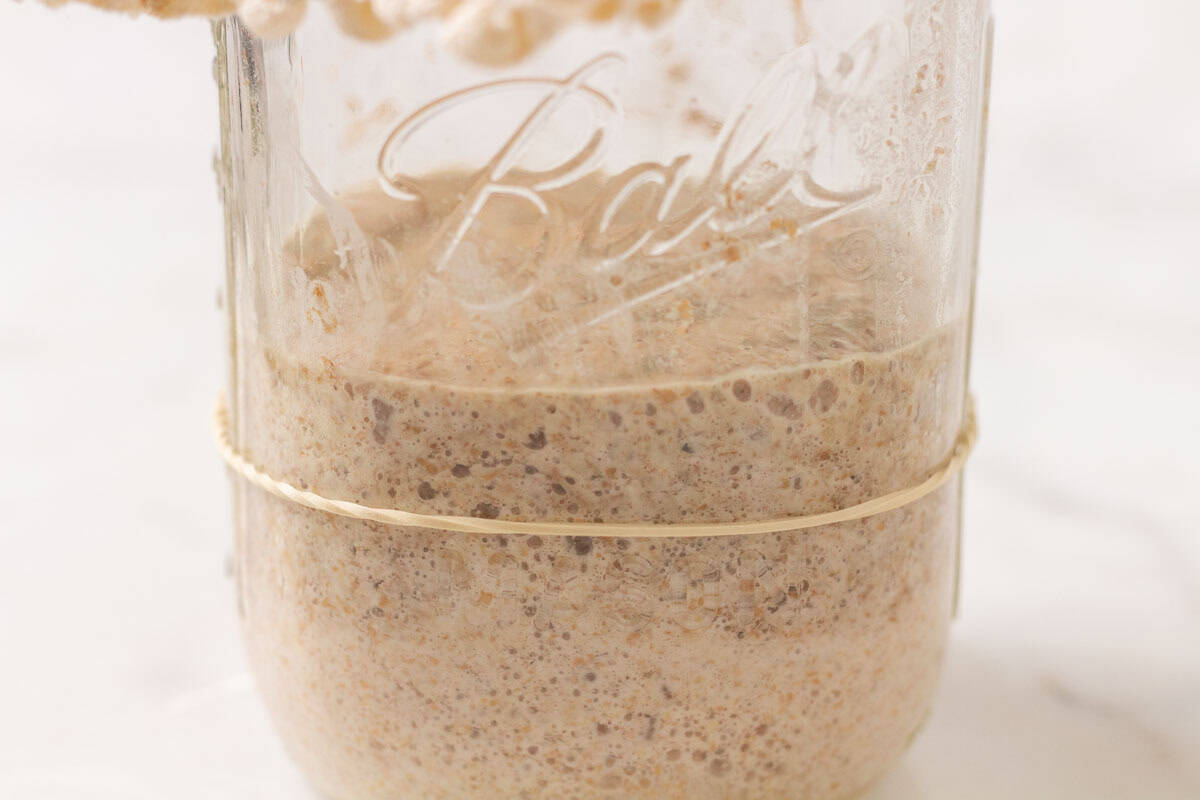
- Day 8-10 – By now, your starter should be doubling in size within hours of feeding. If not and it’s still sluggish, check your water temperature (a little bit warm is great) and make sure it’s stored in a warm spot. (I store mine in my pantry with the door closed.)
Hint: Watch the texture and activity of your starter, not the time it’s taking. Your starter will tell you when it’s ready.
My starter took about 12 days to get established and pass a float test.
If your starter is doubled in size 4-6 hours after feeding, you can try “the float test” to see if it’s ready for use to bake bread.

The Float Test
- After your starter has been fed and doubled in size, take a small spoonful of starter and drop it into a cup of room-temperature water.
- Watch what happens: If your starter floats, it’s airy and full of bubbles, you can bake with it! If it sinks, it needs a little more time and feedings to develop more strength.
Every starter has their own personality. Yours may take 5-7 days or it may take 10-14 days.
Troubleshooting
- Your starter is too thin or runny
What it looks like:
- It spreads flat after feeding
- It has a lot of bubbles but not much rise
What I did:
When Flourence felt too thin and she wasn’t rising much, I added a little extra flour at feeding time.
How to fix it:
- Add 1-2 tablespoons (15-30g) more of flour at your next feeding
- Stir and check the texture
- What we want is thick pancake batter that can trap air
2. Your starter isn’t rising much
What it looks like:
- You’re seeing bubbles but the starter is not really increasing in size
- You have a sour smell but it seems weak
What to try:
- Feed more often (every 12 hours)
- Make sure your starter is thick enough
- Keep it in a warm spot (70-75°F)
3. Your starter smells funny
What it smells like:
- Cheesy, funky or sharp early on
What to know:
As long as you’re not seeing any mold, keep feeding. This is totally normal.
4. It’s been 10-12 weeks and your starter is bubbly but is too weak to pass a float test
What it looks like:
- You’re seeing a lot of bubbles
- You have a nice sour smell
- You do have some rise, but it’s not strong or consistent
- Does not pass a float test
What I did:
Flourence wasn’t runny but she seemed weak. I fed her slightly more flour at each feeding for a couple of days to strengthen her. So if your starter is plenty bubbly but not passing that float test, feeding a little more flour for a couple of days can help.
How to do it:
- Feed at your normal time
- Add 1 extra tablespoon (15g) of flour
- Add just enough water to keep the same thick consistency
5. You’re seeing a liquid on top of your starter (hooch)
What it means:
- Your starter is hungry
What to do:
- Stir it back in or pour it off (I prefer to stir it back in)
- Feed as usual
Variations
Once you have an active and established starter, you can experiment with different types of flour. All-purpose flour keeps the flavor mild and consistent, while flours like whole wheat and rye add strength and flavor.
Top Tips
- Avoid hot water or putting your starter on the stove
- Feed at roughly the same time every day
- Feed with room-temperature or slightly warm water. It helps wake up the yeast.
Related
For an easy and delicious, step-by-step sourdough bread recipe, see my post for how to make Artisan Sourdough Bread. For more bread recipes, visit my bread, buns and rolls page.

How To Make Sourdough Starter
- clean Mason jar (I like to use the wide-mouth 32-ounce jar.)
- light cloth to secure as the lid to your jar
- kitchen scale
- glass measuring cup
- measuring cups
- butter knife
- small rubber/silicone spatula
- rubber band
- 1/2 cup (60g) whole wheat flour After a couple of days, you can switch to all-purpose flour
- 1/3 cup (60g) water
- Add 1/2 cup (60g) whole wheat flour to a Mason jar. (I like to use a 32-ounce with a wide mouth.)
- Pour 1/3 cup (60g) water into the jar with the flour. If too thick, you can add a tablespoon or two more (15-30g), as needed.
- Stir mixture together with a butter knife until combined. (At first, my starter was too dry. It’s because whole wheat flour soaks up more water. If you find this happens, add an extra tablespoon or two (15-30g) of water until you have a texture like thick pancake batter.)
- Use a small rubber spatula to even out your starter inside of your jar.
- Place a rubber band on the jar at your starter’s level to track its rise.
- Cover your jar loosely. (I like to use a cloth doily to cover my jar so that some air can still get inside. I don’t use the metal cover that comes with the Mason jar. I do use the screw part of the lid to secure the doily.) Leave your starter at room temperature. (70-75°F)
- After 24 hours, if you see that your starter has some bubbles or a mild smell, you can go ahead and give it the first feeding. If not, give it a little stir and check back in 24 hours.
- Once you’re ready to feed, discard half of the starter and then add 1/4 cup (30g) of whole wheat flour and 3 tablespoons (30g)of water. (Add more if it’s too thick. You want pancake batter consistency.) Stir with a butter knife and place the rubber band at the batter line again.
What To Expect While Your Starter Gets Established
- Day 1 – Mix the flour and water, stir, loosely cover and store at room temperature. Nothing much to see yet.
- Day 2 – After 24 hours, you check for a few bubbles and a tangy smell. That’s what we’re looking for. If you have that, you’re ready to feed your starter. Feed as in step 7 above. If not, check back in 24 hours.
- Day 3 – You should start seeing more bubbles throughout and a stronger sour/yeasty smell. Feed your starter as before.
- Day 4-5 – Your starter could possibly slow down at this point. You may see it looks the same as the day before or find a layer of liquid on top called “hooch”. If you have this, you can mix it back in or pour it off. I usually mix it back in. Feed your starter as before.
- Day 6-7– You should start seeing more consistent bubbling and some rising. Continue the discard and feeding as before. (You can start using all-purpose flour at this time.) Your starter may double in height 4-6 hours after feeding. If your starter seems active, you can start feeding twice a day. This will help strengthen your starter.
- Day 8-10 – By now, your starter should be doubling in size within hours of feeding. If not and it’s still sluggish, check your water temperature (a little bit warm is great) and make sure it’s stored in a warm spot. (I store mine in my pantry with the door closed.)
- If your starter is doubled in size 4-6 hours after feeding, you can try "the float test" to see if it's ready for use to bake bread.
The Float Test
- After your starter has been fed and doubled in size, take a small spoonful of starter and drop it into a cup of room-temperature water.
- Watch what happens. If your starter floats, it’s airy and full of bubbles, you can bake with it. If it sinks, it needs a little more time and feedings to develop more strength.
Using Your Starter To Bake Bread
- Now that your starter is ready to go, you just need a good sourdough bread recipe that’s easy to navigate. I’ve got you covered there. I love my recipe. It’s easy, delicious, consistent and coming to my blog soon!
Naming Your Starter
Naming your starter is all part of the fun of baking sourdough. Giving your sourdough starter a name makes it seem even more like a little pet!
Here are some ideas for fun names:
- Bubbles
- The Blob
- Patience
- Bread Pitt
- Wheatney Houston
- Breadley Cooper
- Doughbi-Wan-Kenobi
- Doughly Parton
- Doughlene
- Hoochie Mama
- Sourfina
- Bun Jovi
Hopefully that will give you a good start. There are so many ideas on the internet too. Get creative and have fun with it!

Using Your Starter To Bake Bread
Now that your starter is ready to go, you just need a good sourdough bread recipe that’s easy to navigate. I’ve got you covered there. I love my recipe. It’s easy, delicious and consistent.
How To Store Your Sourdough Starter
If you bake a lot, you can keep your starter on the counter or in your pantry and feed it regularly. If you only bake occasionally, you can store it in the refrigerator to slow it down. If you keep it in the refrigerator, feed it once a week.
Whatever method you choose, always store it covered and not airtight.
How To Use Your Sourdough Discard
When I first starting making sourdough, I had no idea there were so many recipes I could make using my discard. I have so many favorites I use now and I never throw away my discard.
Discard doesn’t mean you have to throw it out. It’s simply unfed starter. It works perfectly in recipes that don’t need a strong rise.
Here are some of my favorites:
- English muffins
- cinnamon rolls
- sandwich bread
- chocolate chip cookies
- muffins
- cakes
- focaccia bread
- pancakes
How To Store Your Sourdough Discard
Sourdough discard can be kept in a separate container or jar in the refrigerator. You can add to the container over a few days until you’re ready to bake with it. Store it covered but not airtight.
Discard will keep in the refrigerator for 5-7 days. If you see visible mold or a strong/rotten smell, it’s time to toss it. It should smell sour and not spoiled.
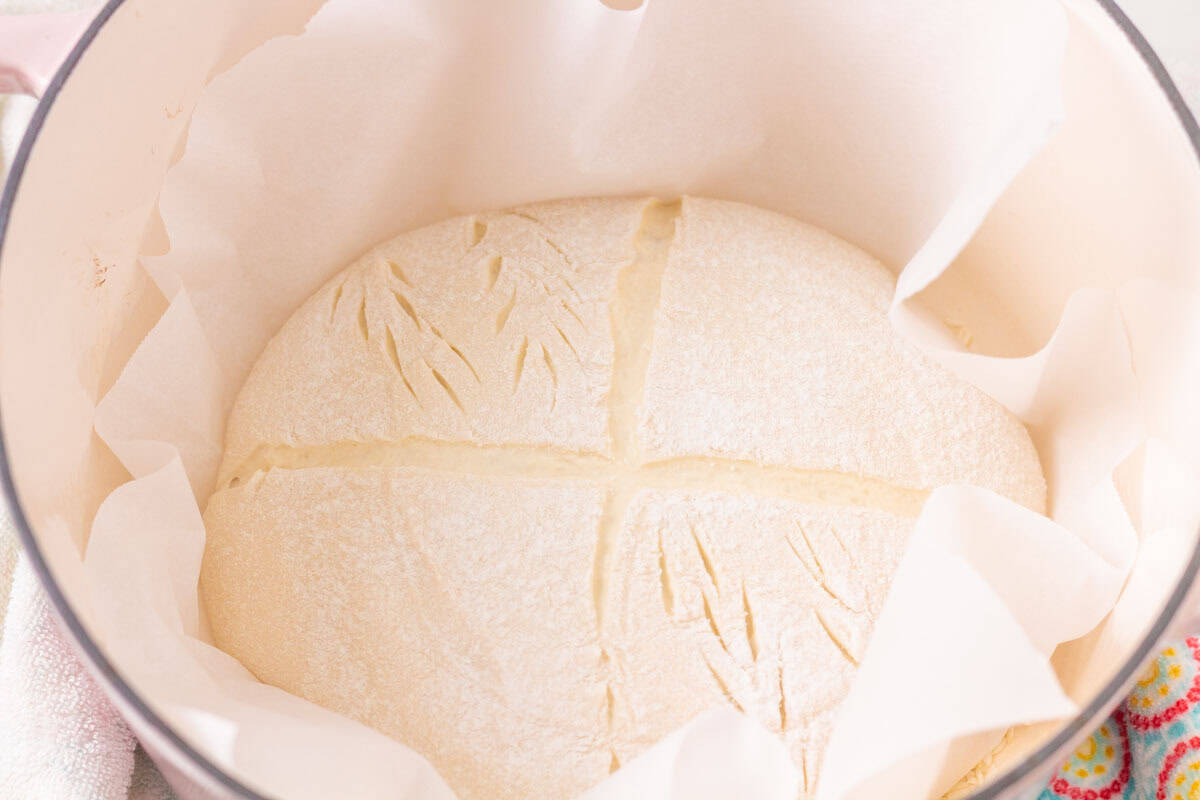
I learned so much from making my own sourdough starter. Try to remember it’s not about perfection, but paying attention and having patience. Your starter may need a little more time, extra flour or a warmer spot to live. This is all normal. Don’t give up!
Sweet regards,
Michele